
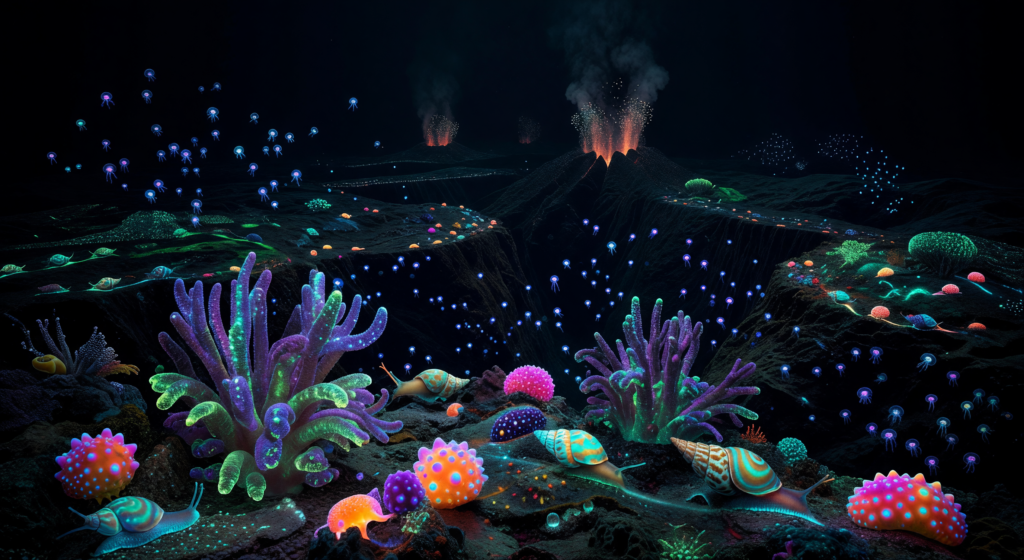
Unveiling the Secrets of the Deep: Discovering New Species in the Ocean Depths
The ocean floor remains one of the most mysterious places on planet Earth. While humans have mapped distant planets and sent rovers to Mars, the deep sea continues to hide countless secrets. Recent expeditions to the ocean’s darkest depths have revealed a treasure trove of bizarre creatures and stunning ecosystems that challenge everything scientists thought they knew about life on Earth.
Journey to the Most Remote Waters
Imagine a place so remote and extreme that few humans have ever ventured there. The South Sandwich Islands in the icy South Atlantic Ocean fit this description perfectly. A team of scientists recently completed a dramatic 35-day mission to these waters aboard the research vessel Falkor (too), operated by the Schmidt Ocean Institute. What they discovered was nothing short of magical.
Using a remotely operated vehicle to explore the depths, the team uncovered stunning coral gardens and rare hydrothermal vents. Among the most exciting findings were numerous marine species likely new to science, including:
- Mysterious corals and sponges
- Unusual snails and sea urchins
- Benthic ctenophores (a type of gelatinous creature)
- Strange sea stars
- A rarely seen dragonfish species
Perhaps one of the most fascinating discoveries was snailfish eggs laid on black coral in one of the world’s deepest trenches. The team also spotted a possible new species of sea cucumber and giant floating pumice stones, evidence of past volcanic eruptions lurking beneath the waves.
Life in the Extreme Depths
The deep sea is not just dark and cold—it’s a realm of crushing pressure where sunlight never penetrates. Yet life finds a way to thrive in these seemingly impossible conditions. Scientists recently unveiled 14 new marine invertebrate species and two new genera discovered at ocean depths exceeding 6,000 meters through the Ocean Species Discoveries initiative.
More than 20 researchers collaborated on this groundbreaking work, using advanced lab techniques to describe these strange creatures. The initiative is revolutionizing how scientists identify and catalog new marine species, speeding up the process of understanding the biodiversity hidden in our oceans.
The Deepest Life Ever Found
In the northwest Pacific Ocean, roughly between Japan and Alaska, researchers from the Chinese Academy of Sciences made a record-breaking discovery. Using a manned submersible called Fendouzhe equipped with cameras and lights, they descended into deep-sea trenches and encountered something extraordinary—the deepest community of chemosynthetic life ever discovered.
What makes these communities so special? Unlike most deep-sea ecosystems that feed on dead animals and organic debris falling from shallower waters, these creatures have evolved a completely different survival strategy. The researchers found fields of marine tube worms peppered with white marine snails, all thriving in the darkness.
These tube worms, along with deep-sea clams discovered nearby, depend on bacteria within their bodies to convert chemical compounds like methane and hydrogen sulfide into food. This process, called chemosynthesis, allows life to flourish in places where photosynthesis is impossible. The methane fueling these communities is likely produced by microbes buried under the seafloor, creating a self-sustaining ecosystem in one of Earth’s most hostile environments.
Uncharted Caribbean Mysteries
The deep sea holds surprises even in regions closer to human civilization. Scientists aboard the British research ship RRS James Cook conducted the first expedition beyond the shallow waters of certain Caribbean islands, revealing underwater worlds that people didn’t even know existed.
The team discovered an underwater mountain range north of Little Cayman island that rises from 2,500 meters deep to about 20 meters below the sea surface. In Turks and Caicos, they found something completely missing from existing sea charts—an extremely steep 3,200-meter high mountain ridge stretching 70 kilometers along the seabed.
The expedition also revealed a massive “blue hole” and coral reefs that appear untouched by climate change, along with never-before-seen sea creatures. These discoveries represent first steps into environments that remained completely unknown to science until now.
Why These Discoveries Matter
Each new species discovered in the deep sea adds another piece to the puzzle of life on Earth. These creatures have evolved unique adaptations to survive in extreme conditions—abilities that could inspire new technologies or medical breakthroughs. Understanding deep-sea biodiversity also helps scientists predict how these ecosystems might respond to climate change and human activities.
Environmental experts from island communities are already using findings from these expeditions to improve biodiversity management plans and identify new sustainable fishing opportunities. The research demonstrates that much of Earth’s biodiversity remains unexplored, waiting to be discovered in the ocean’s depths.
Conclusion
The deep sea continues to astound scientists with its hidden wonders. From chemosynthetic communities thriving in crushing darkness to coral gardens blooming in icy Antarctic waters, these recent discoveries reveal that Earth’s oceans still hold countless mysteries. As technology advances and more expeditions venture into the abyss, who knows what other strange and wonderful creatures await discovery? The deep sea reminds us that exploration isn’t just about looking outward to space—some of the most alien worlds exist right here on our own planet, beneath the waves.